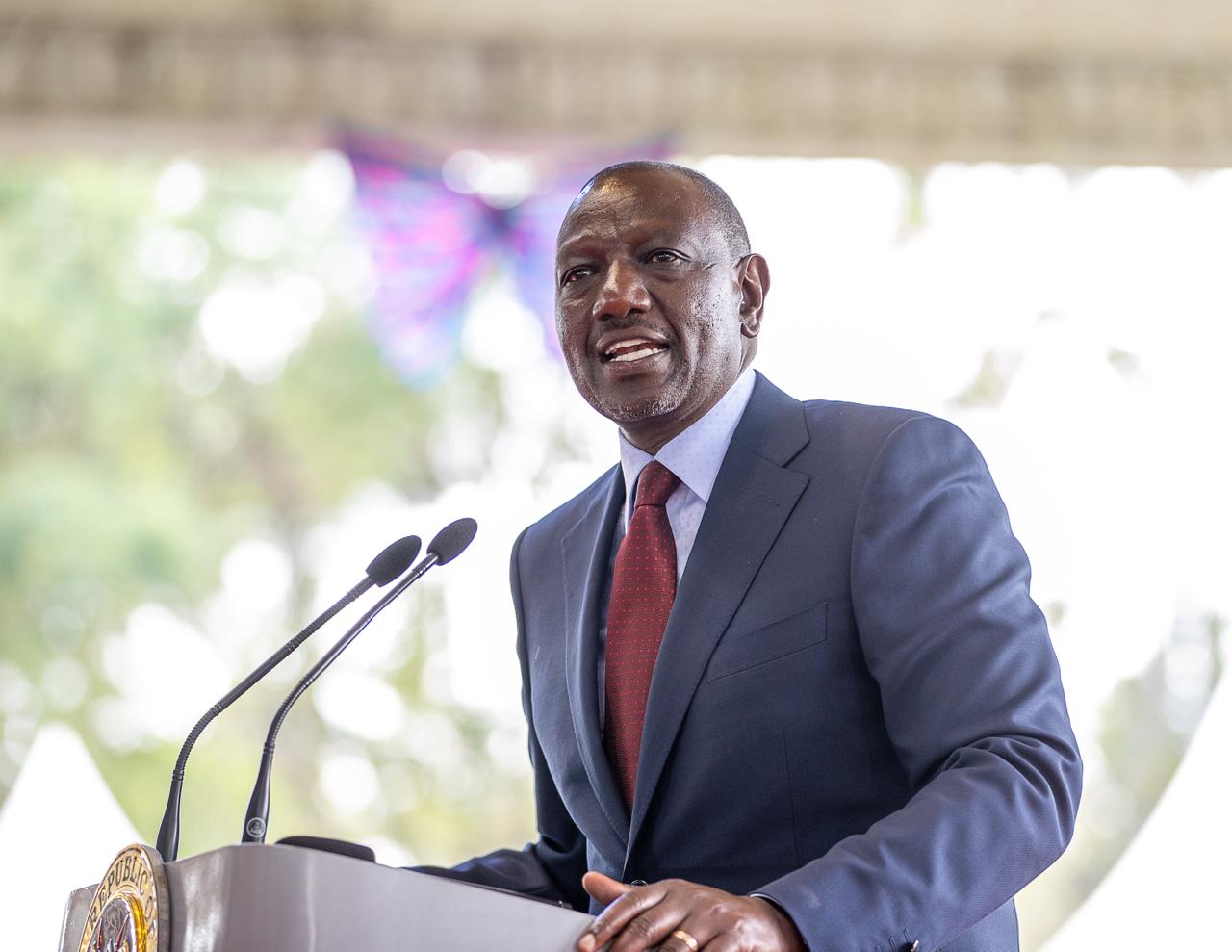
Iran’s ambassador to Kenya, Ali Gholampour, has defended Tehran’s recent military response against Israel and the United States, saying the action was purely an act of self-defence and not an attempt to start a wider conflict.
Speaking during an interview on NTV Kenya on Thursday, the envoy rejected claims that Iran had planned any offensive strike, saying the country only reacted after what he described as “unprovoked aggression” from the two nations.
Gholampour said Iran’s response during the two-day military confrontation focused strictly on military targets that had been involved in attacks on Iranian territory. According to him, civilian areas were not targeted, and Tehran had no intention of harming neighboring countries.
“Their actions against Iran, including sanctions, embargoes, and coercive measures, were aimed at creating chaos and instability,” Gholampour said.
The ambassador described the confrontation as part of a long pattern of pressure and hostile actions directed at Iran. He criticized the idea of launching preemptive strikes, saying such actions cannot be justified under international law and only worsen instability in the region.
Gholampour maintained that Iran has always followed the principle of self-defence. He rejected allegations that the country had any intention of attacking either Israel or the United States.
“There was no plan by Iran to attack Israel or the USA. For at least over centuries, Iran has never invaded or attacked others. We have always been under attack, and we have always defended ourselves.”
He explained that recent strikes against Iran had been launched from foreign military bases located in nearby countries. Because of that, he said, Tehran had no choice but to respond to protect its people and territory.
“You cannot sit and just watch your people being killed daily. You have to react and defend yourself. The only targets are military bases, and we have not attacked our neighbors,” he said, rejecting rumors that Iran had attacked Turkey or other nearby nations.
The ambassador also addressed concerns about Iran’s nuclear activities, saying the country has followed international inspection systems for many years. He pointed out that Iran remains a member of the International Atomic Energy Agency and has allowed continuous inspections of its nuclear facilities.
“Iran is a member of the IAEA. All inspections have been carried out nonstop for two decades. Sixteen reports confirm that Iranian activities remain peaceful, with no evidence of deviation to military purposes.”
Gholampour argued that accusations surrounding Iran’s nuclear and missile programs are often used as justification for hostile actions against the country. According to him, these claims do not reflect the findings of international inspectors.
He also warned that further attacks on Iran could trigger a wider regional confrontation. The envoy said Iran had already made its position clear about how it would react if its territory continued to come under attack.
“From the beginning, our supreme leader declared that if Iran is attacked, it would be a regional war. Our response targets only military bases of aggressors in the region, not civilians,” he said.
The comments come as diplomatic tensions grow over the joint military strikes carried out by Israel and the United States against Iranian targets. In a separate statement, the Israeli embassy in Kenya defended the operation, saying it was necessary to protect national security and counter threats linked to Iran’s missile capabilities and its support for armed groups across the world.
The embassy described the strikes as more than a routine military operation, calling them “not just a military manoeuvre, but an act of survival.”
However, the military action has also drawn criticism from several governments in Europe. Spain’s prime minister, Pedro Sánchez, condemned the attacks and warned that Madrid would not support actions that undermine global stability.
France also raised concerns about the legality and moral implications of the strikes, reflecting growing unease among European nations about the escalation.
In Canada, Prime Minister Mark Carney said the operation appeared to conflict with international law, adding to the list of countries questioning the justification behind the military move.
The issue has also stirred debate within the United States itself, where some members of Congress are questioning the administration’s legal grounds for launching the strikes. The growing scrutiny highlights a widening diplomatic divide as the crisis threatens to deepen tensions across the Middle East.